Buy debt.me.uk ?
We are moving the project
debt.me.uk .
Are you interested in purchasing the domain
debt.me.uk ?
domain@kv-gmbh.de · 0541-91531010
Buy debt.me.uk ?
Can you explain saponification?
Saponification is a chemical reaction that occurs when a fat or oil is mixed with a strong alkali, such as sodium hydroxide (lye), resulting in the formation of soap and glycerin. During saponification, the alkali breaks down the ester bonds in the fat molecules, releasing fatty acids and glycerol. The fatty acids then react with the alkali to form soap molecules, while glycerin is a byproduct of the reaction. This process is commonly used in the production of soap. **
How does saponification work in chemistry?
Saponification is a chemical reaction that involves the hydrolysis of ester bonds in fats and oils by a strong base, typically sodium hydroxide or potassium hydroxide. This reaction results in the formation of glycerol and soap molecules, which are the salts of fatty acids. The hydroxide ions from the base break the ester bonds in the triglyceride molecules, releasing the fatty acids and glycerol. The fatty acids then react with the metal ions from the base to form soap molecules, which are soluble in water and have detergent properties. **

Similar search terms for Saponification
Top-Angebote
Products related to Saponification:
-
Simon & Schuster Money: A Story of Humanity by David McWilliams Economic History & Global Finance ExplainedIn Money: A Story of Humanity, renowned economist David McWilliams explores the fascinating history of money — not just as currency, but as a powerful force that has shaped human civilisation, relationships, technology, and global society. From ancient barter systems to cryptocurrency revolutions, McWilliams reveals how money reflects our values, ambitions, fears, politics, and culture.Rich with storytelling, sharp insights, and humour, this book makes complex economic ideas accessible, engaging, and deeply human. Perfect for readers who enjoy exploring how history, psychology, markets, and power intersect, Money: A Story of Humanity provides a fresh, eye-opening look at how money drives — and is driven by — human behaviour. Ideal for fans of Yuval Noah Harari, Tim Harford, Niall Ferguson, and Mary Beard.7,99 £*Shipping: 2,99 £Secure redirect to the provider
-
HARPERCOLLINS/HQ The Batch Lady & Cooking on a Budget 2 Book Set by Suzanne Mulholland – Easy Batch Cooking & Budget Meal Prep RecipesThe Batch Lady Collection 2 Books Set By Suzanne Mulholland (The Batch Lady Cooking on a Budget, The Batch Lady) The Batch Lady Cooking on a Budget: Shop once. Get organised, plan ahead and create fresh and satisfying meals without breaking the bank. Cook once.Over 100 delicious, simple and energy-efficient batch-cooking recipes that will satisfy the whole family and fill your freezer.Save money all week.Learn to hack your monthly bill, save your hard-earned money and eat well on a budget. The Batch Lady: The Batch Lady has been transforming how thousands of people cook and eat through her revolutionary online channel. Now she’s going to share her secrets with you.With over 80 delicious, home-cooked recipes that are quick to make, create and store, Suzanne's brilliant recipe combinations and time-saving tips will transform your kitchen, and will buy you back extra hours in your week.This is the only guide you will ever need to save you money, time, and headspace, and change your life for good.14,99 £*Shipping: 2,99 £Secure redirect to the provider
-
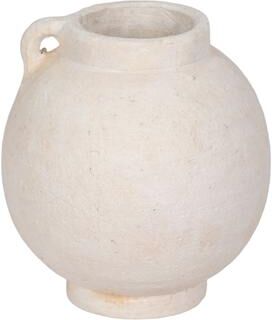
Sagebrook Home Handcrafted Terracotta Pottery Round Vase Modern Visual InterestThis small vase brings contemporary charm to any setting with its handcrafted pottery design and subtly textured terracotta finish, making it a standout among decorative home accents.42,56 $*Shipping: 0,00 $Secure redirect to the provider




-
Is this saponification reaction equation correct?
Yes, the saponification reaction equation provided is correct. Saponification is the process of making soap by reacting a fat or oil with a strong base, such as sodium hydroxide or potassium hydroxide. The reaction results in the formation of soap (sodium or potassium salts of fatty acids) and glycerol. The equation shown accurately represents this chemical transformation. **
-
What are chemical reactions in saponification?
Chemical reactions in saponification involve the reaction of a fat or oil with a strong base, typically sodium hydroxide or potassium hydroxide. This reaction results in the formation of soap and glycerol. The fatty acids in the fat or oil react with the base to form the soap molecules, while glycerol is a byproduct of the reaction. Saponification is a key process in soap-making and is essential for the production of soap. **
-
What is the equation for saponification?
The general equation for saponification is: ester + base → alcohol + carboxylate salt. In the specific case of the saponification of a triglyceride (fat or oil) with a strong base such as sodium hydroxide, the equation is: triglyceride + sodium hydroxide → glycerol + 3 fatty acid salts. **
-
Need help with calculating the saponification value.
To calculate the saponification value of a fat or oil, you need to know the molecular weight of the fatty acid present in the sample. The saponification value is the amount of potassium hydroxide (KOH) required to saponify one gram of the fat or oil. You can calculate the saponification value using the formula: Saponification value = (560 x saponification equivalent weight) / molecular weight of the fatty acid. This value is important in determining the amount of lye needed for soap making or in quality control of fats and oils. **


How can one derive the saponification value?
The saponification value can be derived by determining the amount of potassium hydroxide (KOH) or sodium hydroxide (NaOH) required to saponify a specific amount of fat or oil. This is typically done through a chemical reaction where the fat or oil is mixed with a known concentration of KOH or NaOH. The amount of KOH or NaOH used in the reaction is then measured, and the saponification value is calculated based on the molecular weight of the fat or oil. This value is important in determining the amount of alkali needed for soap making or in assessing the purity of fats and oils. **
What is the reaction equation for saponification?
The reaction equation for saponification involves the hydrolysis of an ester, typically a triglyceride, with a strong base such as sodium hydroxide or potassium hydroxide. The general equation for saponification is: Ester + Base → Alcohol + Salt of Fatty Acid. For example, in the saponification of a triglyceride like olive oil, the reaction equation would be: Triglyceride (olive oil) + 3NaOH → Glycerol + 3 Sodium Salts of Fatty Acids (soap). **
Top-Angebote
Products related to Saponification:
-
Sagebrook Home Handcrafted Terracotta Pottery Round Vase Modern Visual InterestThis small vase brings contemporary charm to any setting with its handcrafted pottery design and subtly textured terracotta finish, making it a standout among decorative home accents.40,45 $*Shipping: 0,00 $Secure redirect to the provider
-
Simon & Schuster Money: A Story of Humanity by David McWilliams Economic History & Global Finance ExplainedIn Money: A Story of Humanity, renowned economist David McWilliams explores the fascinating history of money — not just as currency, but as a powerful force that has shaped human civilisation, relationships, technology, and global society. From ancient barter systems to cryptocurrency revolutions, McWilliams reveals how money reflects our values, ambitions, fears, politics, and culture.Rich with storytelling, sharp insights, and humour, this book makes complex economic ideas accessible, engaging, and deeply human. Perfect for readers who enjoy exploring how history, psychology, markets, and power intersect, Money: A Story of Humanity provides a fresh, eye-opening look at how money drives — and is driven by — human behaviour. Ideal for fans of Yuval Noah Harari, Tim Harford, Niall Ferguson, and Mary Beard.7,99 £*Shipping: 2,99 £Secure redirect to the provider
-
Can you explain saponification?
Saponification is a chemical reaction that occurs when a fat or oil is mixed with a strong alkali, such as sodium hydroxide (lye), resulting in the formation of soap and glycerin. During saponification, the alkali breaks down the ester bonds in the fat molecules, releasing fatty acids and glycerol. The fatty acids then react with the alkali to form soap molecules, while glycerin is a byproduct of the reaction. This process is commonly used in the production of soap. **
-
How does saponification work in chemistry?
Saponification is a chemical reaction that involves the hydrolysis of ester bonds in fats and oils by a strong base, typically sodium hydroxide or potassium hydroxide. This reaction results in the formation of glycerol and soap molecules, which are the salts of fatty acids. The hydroxide ions from the base break the ester bonds in the triglyceride molecules, releasing the fatty acids and glycerol. The fatty acids then react with the metal ions from the base to form soap molecules, which are soluble in water and have detergent properties. **
-
Is this saponification reaction equation correct?
Yes, the saponification reaction equation provided is correct. Saponification is the process of making soap by reacting a fat or oil with a strong base, such as sodium hydroxide or potassium hydroxide. The reaction results in the formation of soap (sodium or potassium salts of fatty acids) and glycerol. The equation shown accurately represents this chemical transformation. **
-
What are chemical reactions in saponification?
Chemical reactions in saponification involve the reaction of a fat or oil with a strong base, typically sodium hydroxide or potassium hydroxide. This reaction results in the formation of soap and glycerol. The fatty acids in the fat or oil react with the base to form the soap molecules, while glycerol is a byproduct of the reaction. Saponification is a key process in soap-making and is essential for the production of soap. **
Similar search terms for Saponification
-
HARPERCOLLINS/HQ The Batch Lady & Cooking on a Budget 2 Book Set by Suzanne Mulholland – Easy Batch Cooking & Budget Meal Prep RecipesThe Batch Lady Collection 2 Books Set By Suzanne Mulholland (The Batch Lady Cooking on a Budget, The Batch Lady) The Batch Lady Cooking on a Budget: Shop once. Get organised, plan ahead and create fresh and satisfying meals without breaking the bank. Cook once.Over 100 delicious, simple and energy-efficient batch-cooking recipes that will satisfy the whole family and fill your freezer.Save money all week.Learn to hack your monthly bill, save your hard-earned money and eat well on a budget. The Batch Lady: The Batch Lady has been transforming how thousands of people cook and eat through her revolutionary online channel. Now she’s going to share her secrets with you.With over 80 delicious, home-cooked recipes that are quick to make, create and store, Suzanne's brilliant recipe combinations and time-saving tips will transform your kitchen, and will buy you back extra hours in your week.This is the only guide you will ever need to save you money, time, and headspace, and change your life for good.14,99 £*Shipping: 2,99 £Secure redirect to the provider
-
Sagebrook Home Handcrafted Terracotta Pottery Round Vase Modern Visual InterestThis small vase brings contemporary charm to any setting with its handcrafted pottery design and subtly textured terracotta finish, making it a standout among decorative home accents.42,56 $*Shipping: 0,00 $Secure redirect to the provider
-
Sagebrook Home Handcrafted Terracotta Pottery Round Vase Modern Visual InterestThis small vase brings contemporary charm to any setting with its handcrafted pottery design and subtly textured terracotta finish, making it a standout among decorative home accents.65,99 $*Shipping: 0,00 $Secure redirect to the provider
-
Sagebrook Home Handcrafted Terracotta Pottery Round Vase Modern Visual InterestThis small vase brings contemporary charm to any setting with its handcrafted pottery design and subtly textured terracotta finish, making it a standout among decorative home accents.37,49 $*Shipping: 0,00 $Secure redirect to the provider
-
What is the equation for saponification?
The general equation for saponification is: ester + base → alcohol + carboxylate salt. In the specific case of the saponification of a triglyceride (fat or oil) with a strong base such as sodium hydroxide, the equation is: triglyceride + sodium hydroxide → glycerol + 3 fatty acid salts. **
-
Need help with calculating the saponification value.
To calculate the saponification value of a fat or oil, you need to know the molecular weight of the fatty acid present in the sample. The saponification value is the amount of potassium hydroxide (KOH) required to saponify one gram of the fat or oil. You can calculate the saponification value using the formula: Saponification value = (560 x saponification equivalent weight) / molecular weight of the fatty acid. This value is important in determining the amount of lye needed for soap making or in quality control of fats and oils. **
-
How can one derive the saponification value?
The saponification value can be derived by determining the amount of potassium hydroxide (KOH) or sodium hydroxide (NaOH) required to saponify a specific amount of fat or oil. This is typically done through a chemical reaction where the fat or oil is mixed with a known concentration of KOH or NaOH. The amount of KOH or NaOH used in the reaction is then measured, and the saponification value is calculated based on the molecular weight of the fat or oil. This value is important in determining the amount of alkali needed for soap making or in assessing the purity of fats and oils. **
-
What is the reaction equation for saponification?
The reaction equation for saponification involves the hydrolysis of an ester, typically a triglyceride, with a strong base such as sodium hydroxide or potassium hydroxide. The general equation for saponification is: Ester + Base → Alcohol + Salt of Fatty Acid. For example, in the saponification of a triglyceride like olive oil, the reaction equation would be: Triglyceride (olive oil) + 3NaOH → Glycerol + 3 Sodium Salts of Fatty Acids (soap). **
* All prices are inclusive of VAT and, if applicable, plus shipping costs. The offer information is based on the details provided by the respective shop and is updated through automated processes. Real-time updates do not occur, so deviations can occur in individual cases. ** Note: Parts of this content were created by AI.